




The Problem Most Businesses Are Actually Facing
Most small and mid-sized businesses don’t lack software. They lack flow. Your team jumps between inboxes, spreadsheets, CRMs, scheduling tools, billing systems, and internal notes. Important work gets slowed down not because people aren’t capable, but because coordination is manual, fragmented, and reactive.
This is where agentic workflows come in. Not as another tool to manage, but as a new way of organizing work.

What’s Changing in AI (In Plain Business Language)
Over the last few years, AI has moved from “answering questions” to taking action within defined boundaries. Instead of a single chatbot responding to prompts, we now have intelligent agents that can:
- Monitor systems
- Make decisions based on rules and context
- Trigger actions across tools
- Escalate to humans when needed
An agentic workflow is simply a business process where one or more AI agents coordinate tasks end-to-end following your rules, using your data, and working alongside your team. Think less “AI magic” and more digital operations staff that never gets tired.
Why This Matters for Small and Medium Businesses
Large enterprises have entire departments for operations, analytics, and process optimization. SMBs don’t. Agentic workflows level the playing field by:
- Reducing manual coordination
- Eliminating repetitive decision-making
- Keeping processes consistent, even as you grow
Some context:
- Employees spend an estimated 20–30% of their week on repetitive administrative tasks
- Missed follow-ups and slow responses are among the top reasons customers churn
- Most SMBs use 10–20 disconnected tools that don’t talk to each other well
Agentic workflows don’t replace your tools, they connect and orchestrate them.
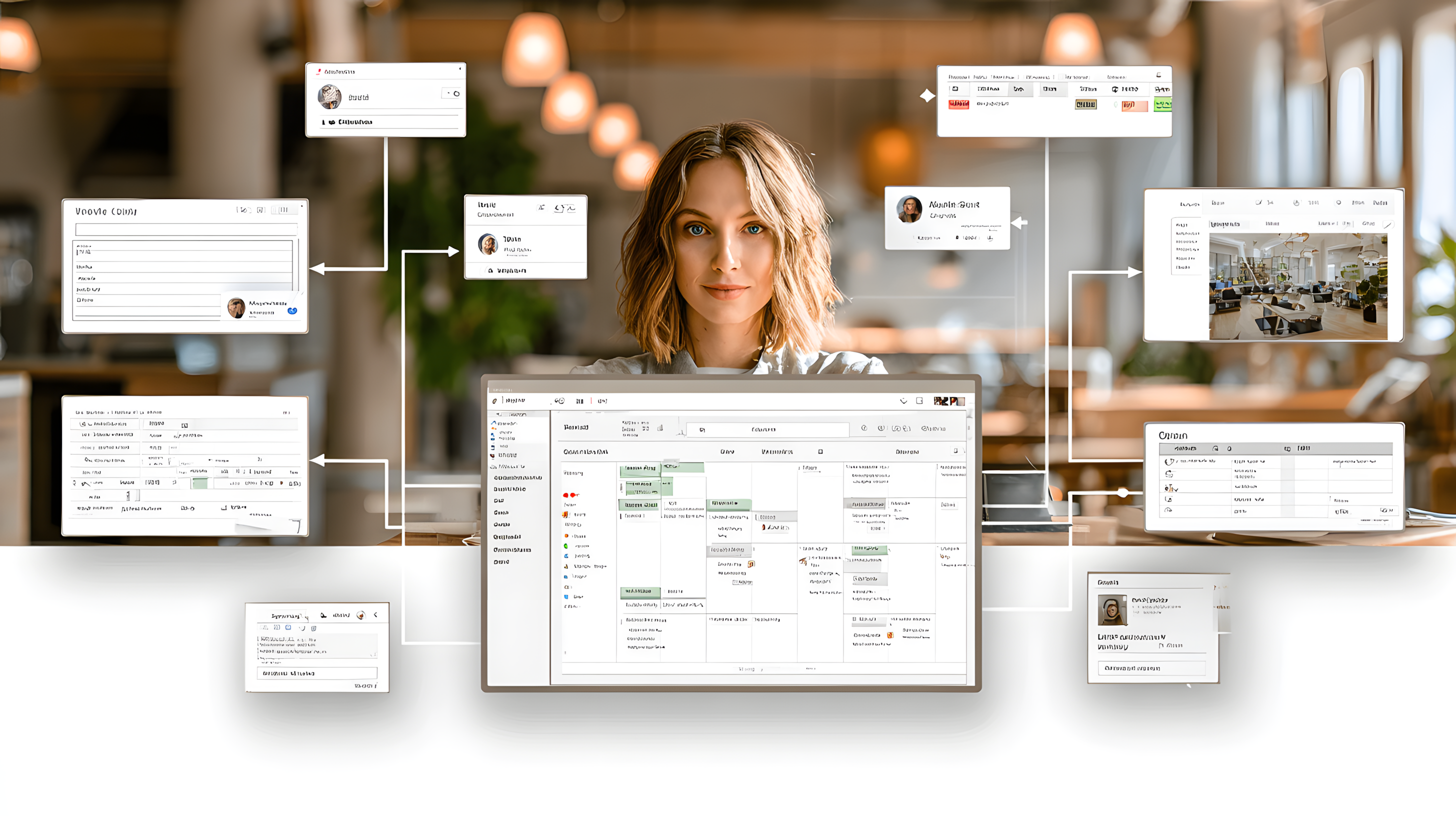
What Agentic Workflows Look Like in Real SMB Operations
Here are examples we see resonate most with SMBs and clinics:
1. Intake & Scheduling
An agent:
- Monitors new inquiries (web, email, form)
- Validates required information
- Schedules appointments based on availability
- Sends confirmations and reminders
- Flags exceptions to staff
2. Inbox & Follow-Ups
An agent:
- Categorizes incoming messages
- Drafts responses for common requests
- Tracks unanswered items
- Nudges customers or patients automatically
- Escalates sensitive cases to humans
3. Billing & Reporting
An agent:
- Reconciles invoices
- Flags anomalies or missing data
- Generates weekly summaries
- Alerts leadership to trends, not raw spreadsheets
4. Internal Operations
An agent:
- Monitors KPIs
- Coordinates handoffs between teams
- Documents decisions
- Ensures nothing “falls through the cracks”
In all cases, humans stay in control. The agent works within defined guardrails.

The Benefits (The Real Ones)
Time Savings
Your team spends less time chasing information and more time serving customers.
Consistency
Processes run the same way every time, even on busy days.
Faster Response Times
Customers don’t wait hours (or days) for routine actions.
Scalability
You can grow volume without hiring linearly.
Better Visibility
Leaders see what’s happening in real time, not weeks later.
The Trade-Offs and Limitations (No Sugarcoating)
Agentic workflows are powerful, but not magic.
They Require Clear Processes
If your workflow is undefined or constantly changing, the agent will struggle.
They Don’t Replace Judgment
Agents handle patterns and rules. Humans handle nuance, empathy, and strategy.
They Must Be Designed Thoughtfully
Poorly designed agents can create noise, confusion, or over-automation.
They Depend on Trustworthy Data
Messy data in = messy outcomes out.
This is why agentic workflows should be built intentionally, not bolted on.

Common Misconceptions SMBs Have
“This is only for big companies.”
In reality, SMBs benefit the most because operational efficiency matters more when resources are tight.
“We’ll lose control.”
The opposite is true when done right. You define the rules, thresholds, and escalation points.
“This replaces staff.”
Agentic workflows replace busywork, not people. Teams become more effective, not smaller.
The Code01 Perspective
At Code01, we don’t think in terms of “AI tools.”
We think in terms of intelligent systems that support how your business actually runs. That means:
- Private, secure AI
- Agentic workflows tailored to your operations
- Human-in-the-loop by design
- Clear ROI, not experimentation theater
We focus on workflow intelligence, not flashy demos.

Closing Thought
The future of work isn’t humans vs. AI.
It’s humans supported by systems that handle coordination, repetition, and oversight.
Agentic workflows quietly do the work in the background so your people can focus on judgment, relationships, and growth. If your business feels busy but not efficient, overwhelmed but under-leveraged, agentic workflows may be the missing layer.
Not more software.
Not more staff.
But smarter orchestration of what you already have.
That’s where the real advantage begins.